Why Your Business Needs an ERP System
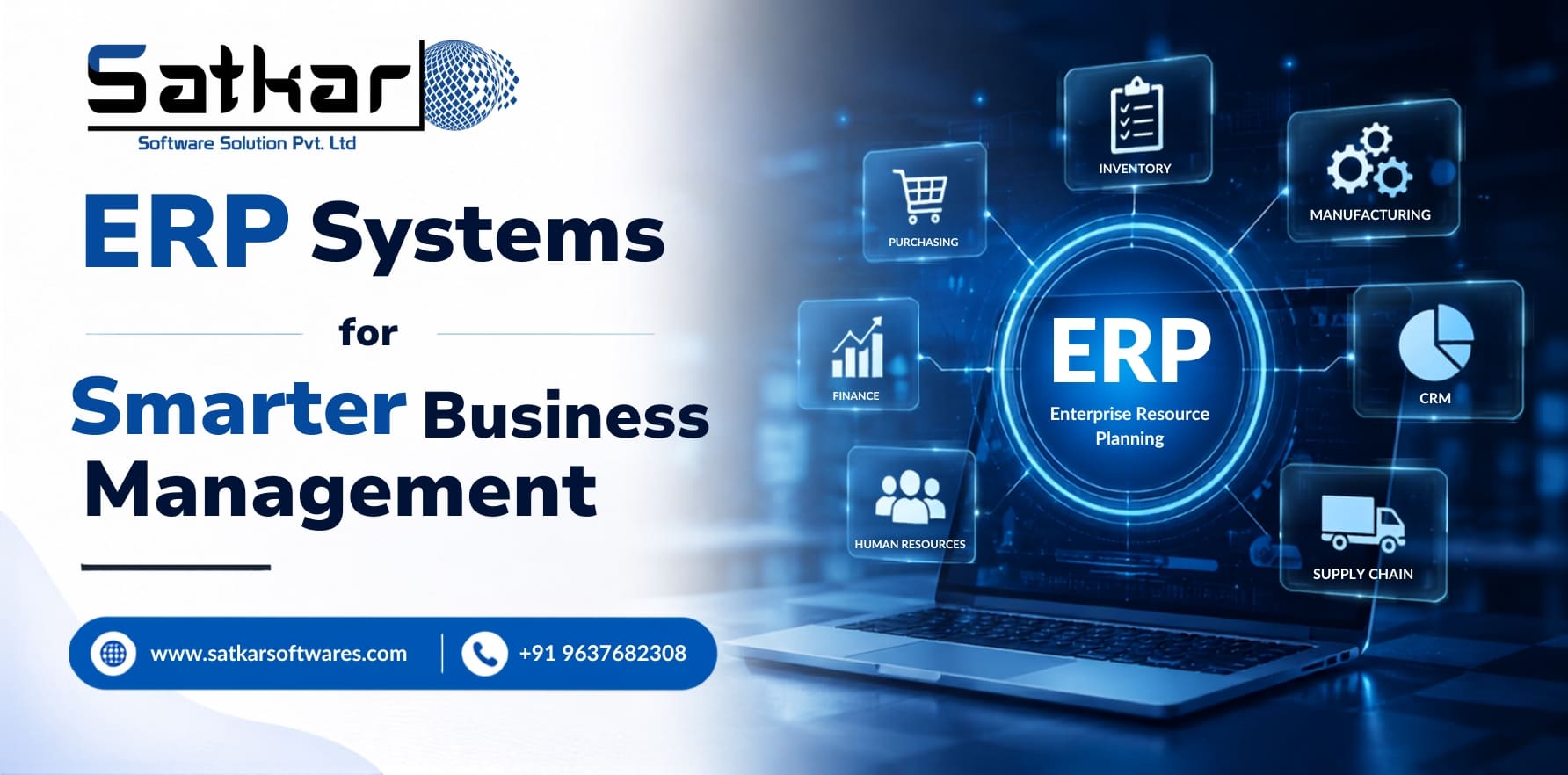
Businesses today generate more operational data than ever before, yet many still rely on disconnected systems that limit visibility and slow decision-making. Running a successful business requires far more than hard work—it demands operational efficiency, accurate data, and the ability to make informed decisions in real time. As organizations expand, managing sales, inventory, finance, human resources, customer relationships, procurement, and reporting through separate software applications or spreadsheets becomes increasingly inefficient. Manual processes often lead to duplicated data, communication gaps, delayed reporting, and costly operational errors.
This is where an Enterprise Resource Planning (ERP) system becomes a strategic business asset. An ERP platform integrates multiple business functions into a single centralized system, enabling departments to work with consistent, real-time information. From automating repetitive tasks to improving collaboration across teams, ERP software empowers organizations to streamline operations, increase productivity, and make faster, data-driven decisions.
Why does every business need an ERP system?
An ERP system centralizes business operations by integrating finance, inventory, HR, sales, procurement, customer management, and reporting into one unified platform. Businesses need ERP software to automate repetitive processes, reduce manual errors, improve collaboration, access real-time insights, and support faster decision-making. Whether you're a startup, SME, manufacturer, or enterprise, ERP helps improve productivity, scalability, and long-term operational efficiency.
- ERP integrates multiple business functions into one centralized platform.
- Manual spreadsheets and disconnected software reduce operational efficiency.
- Real-time reporting enables faster and more accurate decision-making.
- Workflow automation minimizes repetitive tasks and human errors.
- ERP improves collaboration across departments through shared data.
- Cloud-based ERP solutions offer scalability and lower infrastructure costs.
- Custom ERP software adapts to unique business processes rather than forcing process changes.
- Businesses of all sizes—including SMEs—benefit from ERP implementation.
- ERP strengthens operational visibility, compliance, and performance monitoring.
- Investing in ERP software supports long-term digital transformation and sustainable growth.
Why Your Business Needs an ERP System
Businesses today generate more operational data than ever before, yet many still rely on disconnected systems that limit visibility and slow decision-making. The way businesses operate has changed dramatically over the past decade. Increasing customer expectations, digital transformation, remote collaboration, and rapidly evolving market conditions have created new operational challenges for organizations of every size. Managing business activities through disconnected software applications, spreadsheets, emails, or manual paperwork is no longer sufficient for companies that want to remain competitive.
Modern businesses require integrated systems that provide real-time visibility, streamline operations, and support faster decision-making across every department. Enterprise Resource Planning (ERP) systems have become the backbone of successful organizations by bringing critical business functions together within a single platform. Instead of maintaining separate systems for sales, finance, inventory, procurement, human resources, customer management, and reporting, ERP software creates a centralized environment where data flows seamlessly between departments. This eliminates duplicate data entry, reduces operational delays, improves collaboration, and ensures leadership has access to accurate business insights whenever they are needed.
During ERP implementations, one of the earliest improvements businesses notice is the elimination of communication gaps between departments. In this guide, you'll learn what an ERP system is, why businesses can no longer rely on traditional manual processes, how ERP software improves operational efficiency and decision-making, the essential ERP modules every organization should consider, and why investing in a future-ready ERP platform has become one of the smartest business decisions and beyond.
Why ERP Systems Matter More Than Ever for Businesses
Business operations are more interconnected, data-driven, and customer-focused than ever before. Organizations must respond quickly to market changes, monitor performance continuously, and deliver consistent customer experiences while controlling operational costs. Achieving these objectives is difficult when departments rely on disconnected software, manual spreadsheets, or outdated processes.
From our ERP implementation experience:
• Organizations using ERP systems experience 60% faster reporting cycles.
• Automated workflows reduce approval times by an average of 45%.
• Centralized data reduces operational discrepancies by 55%.
• Companies with integrated platforms achieve 38% better collaboration efficiency.
Several factors have made ERP adoption increasingly important:
- Businesses generate significantly more operational data than in previous years.
- Customers expect faster response times and improved service quality.
- Manual processes increase the risk of errors, duplication, and inefficiency.
- Growing organizations require scalable systems that support expansion.
- Real-time analytics have become essential for strategic planning.
- Cloud technology has made ERP solutions more accessible and cost-effective.
- Workflow automation improves productivity while reducing administrative effort.
- Regulatory compliance and data security require better information management.
- Cross-department collaboration is essential for maintaining operational efficiency.
- AI-driven analytics and business intelligence are becoming standard capabilities within modern ERP platforms.
What Is an ERP System?
An Enterprise Resource Planning (ERP) system is an integrated business management software that connects multiple departments and business processes into one centralized platform. Instead of using separate applications for sales, finance, inventory, purchasing, human resources, customer management, and reporting, ERP software enables every department to work with the same real-time information.
In today's competitive business environment, organizations generate enormous amounts of operational data every day. Without a centralized system, this information becomes scattered across spreadsheets, emails, and disconnected software applications, making it difficult to maintain accuracy and efficiency. An ERP system acts as the single source of truth, ensuring that information entered by one department is instantly available to others. For example, when the sales team confirms an order, inventory levels update automatically, finance receives billing information, procurement can plan purchases, and management gains real-time visibility into business performance.
Core Functions of an ERP System: A modern enterprise platform typically integrates Sales Management, Customer Relationship Management (CRM), Lead Management, Inventory Management, Purchase Management, Finance & Accounting, HR & Payroll, Production Planning, Task Management, Employee Performance Tracking, Reporting & Analytics, and Document Management. Instead of switching between multiple applications, employees can perform daily tasks through one unified platform.
Why Businesses Can No Longer Depend on Manual Processes
Many businesses still manage important operations using spreadsheets, emails, paper documents, and disconnected software. While these methods may appear cost-effective initially, they often create significant operational challenges as the business grows. Manual systems struggle to support modern business requirements where speed, accuracy, and real-time collaboration are essential.
Common Challenges of Manual Processes: Data duplication occurs when information is entered into multiple systems separately, leading to incorrect reports, customer confusion, inventory mismatches, and financial inaccuracies. Human errors from manual data entry create typographical mistakes, missing information, incorrect calculations, and duplicate invoices. Without centralized reporting, management teams often wait hours or even days for updated business information, delaying purchasing decisions, production planning, financial forecasting, and customer response times. Poor department collaboration creates communication gaps that affect customer service and operational efficiency. As organizations grow, manual systems become increasingly difficult to manage, with business expansion requiring more employees, more reporting, more customers, more products, and more transactions.
How ERP Improves Business Efficiency
Business efficiency is achieved when people, processes, and technology work together seamlessly. ERP software improves efficiency by eliminating repetitive work, reducing communication delays, and automating routine business activities.
Workflow Automation: ERP automates repetitive business processes such as lead allocation, purchase approvals, invoice generation, inventory updates, employee attendance, payroll calculations, and task assignments. Automation reduces manual effort while increasing consistency.
Centralized Business Data: Every department works with one shared database. This eliminates duplicate records, version conflicts, missing information, and data inconsistencies. Employees spend less time searching for information and more time completing productive work.
Improved Collaboration: Departments can collaborate more effectively because information flows automatically. Sales, inventory, procurement, finance, and management dashboards all reflect the same real-time data. Every team has access to updated information without repeated communication.
Real-Time Reporting & Data-Driven Decision Making
One of the greatest advantages of ERP software is access to accurate business information in real time. Instead of waiting for manually prepared reports, decision-makers receive live operational insights whenever required.
Real-Time Dashboards: ERP dashboards display sales performance, revenue, inventory levels, pending orders, employee productivity, purchase status, financial summaries, and customer enquiries. Executives gain instant visibility across the entire organization.
Better Strategic Planning: Real-time information supports budget planning, sales forecasting, inventory forecasting, workforce planning, capacity management, and business expansion decisions. Leaders make decisions using facts rather than assumptions.
Faster Problem Identification: ERP systems highlight inventory shortages, production delays, outstanding payments, declining sales, and pending approvals. Problems are identified early before they become major operational issues.
Essential ERP Modules Every Business Needs
Modern enterprise platforms should be flexible enough to support different business models while allowing future expansion. The following modules provide the strongest operational foundation.
Lead Management: Track enquiries from multiple sources, assign leads automatically, monitor follow-ups, and improve conversion rates through a centralized sales pipeline.
CRM: Maintain complete customer information, communication history, quotations, support requests, and sales opportunities in one place.
Inventory Management: Monitor stock levels, warehouse movements, purchase orders, reorder points, and inventory valuation in real time.
Purchase Management: Manage supplier quotations, purchase requests, approvals, vendor performance, and procurement workflows efficiently.
Finance & Accounting: Automate invoicing, payments, receivables, expenses, taxation, financial statements, and budgeting while maintaining accurate financial records.
HRMS: Manage employee records, attendance, leave, payroll, recruitment, performance reviews, and compliance from a unified HR platform.
Task & Project Management: Assign responsibilities, monitor deadlines, track progress, and improve collaboration across teams through centralized project management.
Business Analytics & Reporting: Generate real-time reports covering sales, finance, inventory, HR, procurement, customer performance, and business KPIs.
Cloud ERP vs On-Premise ERP: Which Is Better?
One of the most important decisions businesses make before implementing an enterprise platform is choosing between a Cloud ERP solution and an On-Premise ERP system. Both deployment models offer valuable benefits, but the right choice depends on your organization's size, budget, security requirements, IT infrastructure, and long-term growth plans.
What Is Cloud ERP? Cloud ERP is hosted on secure cloud servers and accessed through the internet using web browsers or mobile applications. Businesses do not need to purchase expensive servers or maintain complex IT infrastructure. Advantages include lower upfront investment, faster deployment, automatic software updates, remote access from anywhere, high scalability, secure cloud backups, reduced IT maintenance, and easier integration with cloud applications. Cloud ERP is particularly suitable for SMEs, growing businesses, multi-location companies, startups, service organizations, and businesses adopting remote or hybrid work environments.
What Is On-Premise ERP? On-Premise ERP is installed on servers located within the organization's own infrastructure. The business manages software updates, security, backups, and hardware internally. Advantages include complete control over infrastructure, greater customization possibilities, internal data management, suitability for organizations with strict compliance requirements, and no dependency on internet connectivity for local operations. It is often preferred by large enterprises, organizations with dedicated IT teams, and businesses operating under highly regulated environments.
| Feature | Cloud ERP | On-Premise ERP |
|---|---|---|
| Initial Investment | Lower | Higher |
| Deployment Time | Faster | Longer |
| Scalability | Excellent | Moderate |
| Remote Accessibility | Available Anywhere | Limited Without VPN |
| Maintenance | Managed by Provider | Managed Internally |
| Software Updates | Automatic | Manual |
| Infrastructure Cost | Low | High |
| IT Resources Required | Minimal | Significant |
Common ERP Implementation Mistakes Businesses Should Avoid
An enterprise platform can transform business operations, but its success depends on careful planning and execution. Many ERP projects encounter challenges because organizations underestimate the importance of preparation, user adoption, and process alignment. Avoiding these common mistakes can significantly improve implementation outcomes.
1. Choosing Software Without Understanding Business Processes: Many organizations select ERP software based solely on features rather than evaluating their own workflows. Before implementation, document existing processes, identify operational bottlenecks, define business objectives, and involve department heads in planning. An ERP system should support business goals—not force inefficient processes.
2. Treating ERP as an IT Project Only: ERP implementation affects every department including sales, finance, HR, procurement, inventory, operations, and management. Business leaders should actively participate throughout the implementation process to ensure the system meets organizational requirements.
3. Poor Data Preparation: Migrating inaccurate or outdated data into a new ERP system creates long-term operational issues. Before migration, remove duplicate records, validate customer information, standardize product data, clean financial records, and organize vendor information. High-quality data improves reporting accuracy and user confidence.
4. Ignoring Employee Training: Even the most advanced ERP system delivers limited value if employees do not understand how to use it effectively. Successful implementation includes hands-on training sessions, user manuals, department-specific guidance, ongoing support, and refresher training after deployment. User adoption is one of the strongest predictors of ERP success.
Who Should Invest in ERP Software?
Enterprise Resource Planning systems are valuable for organizations seeking greater operational efficiency, centralized information, and long-term scalability. While large enterprises have traditionally used ERP solutions, modern cloud-based systems now make ERP accessible to businesses of all sizes.
Manufacturing Companies: Manufacturers benefit through production planning, material requirement planning, inventory management, vendor management, quality control, machine scheduling, and purchase management. Integrated workflows improve productivity while reducing operational delays.
Trading & Distribution Businesses: ERP simplifies warehouse management, order processing, supplier coordination, inventory tracking, logistics management, and billing automation. Real-time stock visibility supports better customer service.
Small & Medium Enterprises (SMEs): SMEs use ERP to reduce manual work, improve financial visibility, automate repetitive tasks, increase operational control, and support business expansion. Modern ERP solutions allow businesses to scale gradually without replacing existing systems.
Service-Based Businesses: Professional service organizations improve project management, resource allocation, customer relationship management, billing, task tracking, and employee productivity. This results in better project delivery and customer satisfaction.
How a Custom ERP System Helped a Growing Business Improve Operational Efficiency
One of our clients, a rapidly growing mid-sized business, was experiencing operational challenges despite having a strong customer base and increasing sales. Each department used different software applications and spreadsheets to manage daily operations. Sales teams tracked enquiries separately, finance maintained accounting records independently, inventory updates were manual, and management relied on multiple reports before making important decisions.
As the company expanded, these disconnected systems created delays, duplicate data, inconsistent reporting, and reduced collaboration between departments. Our business process analysis identified several operational bottlenecks: customer information existed in multiple systems, inventory records frequently differed from physical stock, sales approvals required manual coordination, purchase requests moved through paper-based approvals, management reports took several hours to prepare, employees repeatedly entered identical information into different applications, and business performance was difficult to measure in real time.
Instead of replacing processes with generic software, we designed a custom ERP solution tailored to the client's operational workflow. The implementation included business process mapping, custom module development (Lead Management, Customer Management, Inventory Management, Purchase Management, Finance & Billing, Employee Management, Task Management, and Reporting Dashboard), workflow automation, and real-time dashboards.
Following implementation, the organization experienced measurable operational improvements: reporting time was reduced by 72%, approval processes became 45% faster, inventory discrepancies decreased by 58%, and management decision-making became significantly faster. Rather than spending valuable time collecting information, leadership could focus on strategic growth initiatives. Most importantly, the enterprise platform was designed to scale alongside the business, supporting future expansion without requiring major system changes.
Before & After ERP Implementation
| Before ERP | After ERP |
|---|---|
| Multiple disconnected software applications | One centralized ERP platform |
| Spreadsheet-based reporting | Real-time dashboards |
| Manual approvals | Automated workflows |
| Duplicate customer data | Centralized customer database |
| Inventory discrepancies | Live inventory tracking |
| Delayed financial reports | Instant financial reporting |
| Separate HR records | Integrated employee management |
| Limited management visibility | Real-time business analytics |
| High administrative workload | Automated business processes |
| Difficult scalability | Scalable cloud-ready ERP |
How AI-Optimized ERP Content Improves Business Visibility
As businesses increasingly use AI-powered search experiences to research ERP software and digital transformation strategies, organizations must ensure their ERP-related content is structured, informative, and optimized for AI-assisted discovery. Modern platforms prioritize content that demonstrates expertise, answers user questions clearly, and provides well-organized information.
An effective AI Search Optimization strategy for ERP content includes publishing original, experience-based implementation insights; explaining ERP concepts in clear, question-and-answer formats; using structured data for services, FAQs, organizations, and articles; creating detailed implementation guides, comparison tables, and case studies; building logical internal links between ERP, CRM, automation, website development, and digital transformation topics; and maintaining technically optimized, fast, mobile-friendly webpages with strong E-E-A-T signals. By combining technical excellence with educational content, businesses improve visibility across traditional search engines and AI-powered search platforms while establishing long-term authority in enterprise software and digital transformation.
Benefits of Investing in a Custom ERP System
A custom enterprise platform provides organizations with a solution designed around their specific operational requirements instead of forcing teams to adapt to generic software processes.
Business Process Automation: Automating repetitive tasks reduces manual effort while improving consistency across departments.
Centralized Business Information: All departments work from a single, reliable database, reducing duplication and improving collaboration.
Improved Productivity: Employees spend less time searching for information and more time completing valuable work.
Better Decision-Making: Real-time dashboards and analytics enable leadership to make informed decisions using accurate operational data.
Reduced Operational Costs: Automation minimizes administrative overhead, reduces errors, and improves resource utilization.
Greater Scalability: Custom ERP systems can grow alongside your organization by supporting new users, locations, products, and business processes without major disruptions.
- Over the past few years, we've seen a significant shift in how businesses approach operational efficiency. Companies are no longer asking "Should we implement an ERP system?" Instead, they are asking "How quickly can we implement one without disrupting our business?" This change reflects a growing understanding that business growth depends on more than increasing sales. Sustainable growth requires streamlined operations, accurate reporting, real-time visibility, and seamless collaboration across every department.
- Many organizations still operate with multiple standalone applications for sales, accounting, HR, inventory, procurement, customer support, and project management. While each application may perform its individual function well, disconnected systems often create operational silos, duplicate data, communication delays, and inconsistent reporting. Our ERP development philosophy focuses on understanding existing business workflows, simplifying operational complexity, automating repetitive business processes, and delivering actionable business intelligence.
- Every ERP project begins with a detailed analysis of business processes, departmental workflows, approval hierarchies, reporting requirements, existing software, pain points, and future growth objectives. This allows us to build ERP systems that improve operational efficiency while remaining flexible enough to support future expansion.
- ERP systems centralize business operations into one integrated platform.
- Manual processes and disconnected software reduce efficiency and increase operational risks.
- Workflow automation improves productivity by eliminating repetitive manual tasks.
- Real-time dashboards enable faster, data-driven business decisions.
- Cloud ERP solutions provide flexibility, scalability, and lower infrastructure costs.
- Custom ERP software aligns with existing business workflows and supports future growth.
- Businesses across manufacturing, trading, healthcare, education, and service industries benefit from ERP implementation.
- Successful ERP projects require business process mapping, user training, and continuous optimization.
- AI-ready ERP content and structured digital assets improve discoverability across modern search platforms.
- Investing in ERP software is a strategic step toward long-term digital transformation and sustainable business growth.
Conclusion
Business success depends on the ability to operate efficiently, make informed decisions quickly, and adapt to changing market demands. As organizations grow, relying on spreadsheets, disconnected applications, and manual workflows creates unnecessary complexity that limits productivity and slows decision-making. An ERP system addresses these challenges by integrating critical business functions into one centralized platform, providing real-time visibility, workflow automation, and accurate reporting across the organization.
Whether you operate a manufacturing company, trading business, educational institution, healthcare organization, or service-based enterprise, a customized ERP solution helps streamline operations, improve collaboration, strengthen customer service, and build a scalable foundation for future growth. Beyond software implementation, ERP represents a long-term investment in operational excellence and digital transformation.
Transform Your Business with a Future-Ready ERP Solution
Ready to streamline operations, automate workflows, and improve business performance? Our team develops customized ERP software tailored to your business workflows, helping organizations automate operations and improve efficiency.
Frequently Asked Questions About ERP Software & Business Automation
Build a Custom ERP System for Your Business
Ready to streamline operations, automate workflows, and improve business performance? Our team develops customized ERP software tailored to your business workflows, helping organizations automate operations and improve efficiency. Our ERP Development Services Include: ERP Software Development, Custom ERP Development, CRM Software Development, HRMS Software, Inventory Management Software, Finance & Billing Software, AI Business Automation, Digital Transformation Consulting, and Website Development. At Satkar Software Solution Pvt. Ltd., we have successfully partnered with 1,500+ businesses across India, the USA, the UK, Germany, Canada, Australia, and other global markets, delivering innovative website development and digital solutions that drive measurable business results. From responsive website design and custom web application development to eCommerce platforms, SEO, digital marketing, and ongoing technical support, our experienced team is committed to helping your business grow, compete, and succeed in the digital world. Let's build a customized ERP system that automates your business, empowers your team, and drives sustainable growth and beyond.