The Secret Balance Every Business Needs: How Yin & Yang Leadership Creates Sustainable Growth
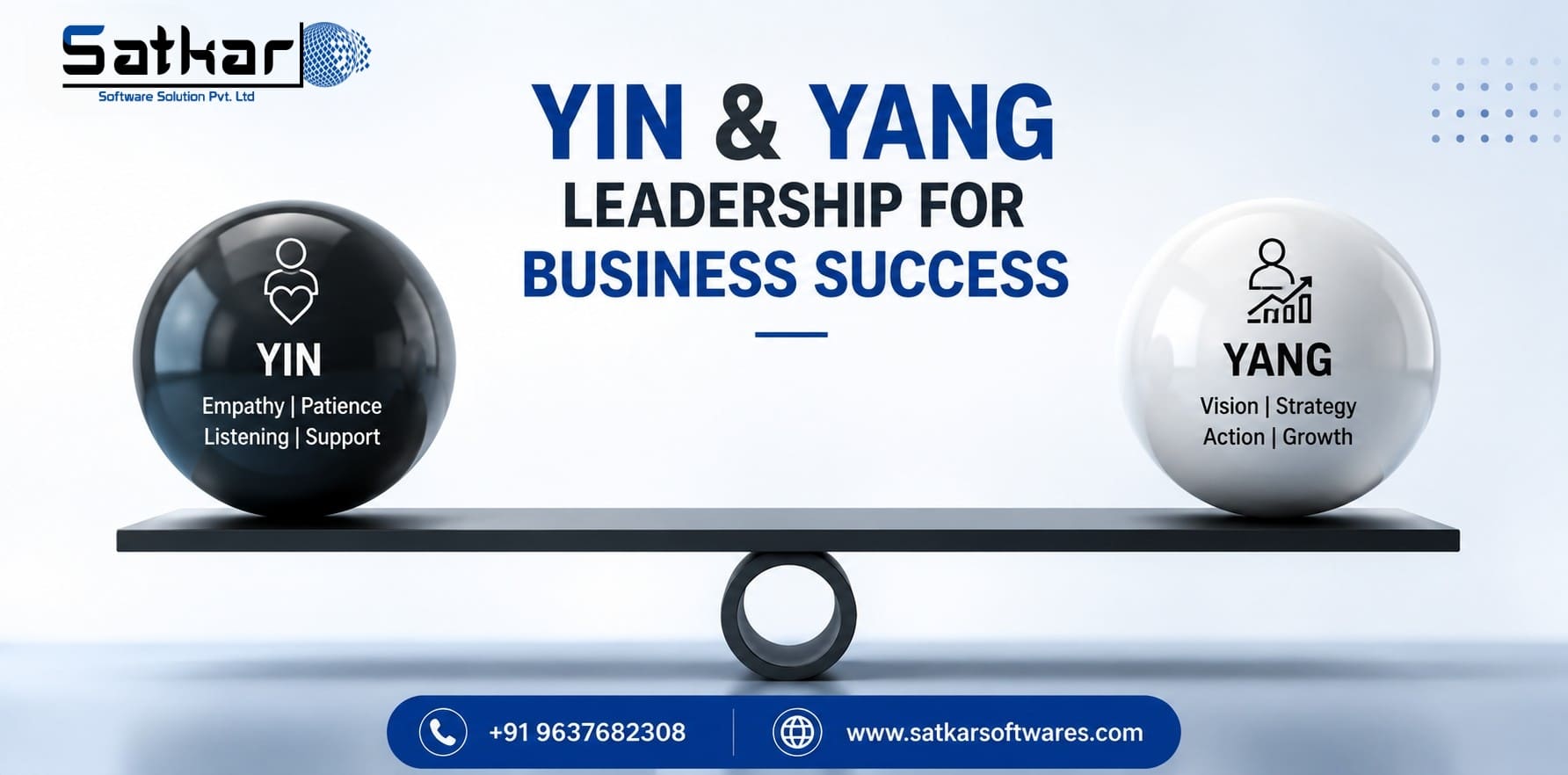
Today's successful businesses understand that sustainable growth is not achieved through profits alone or by focusing solely on employee satisfaction. Instead, long-term success comes from maintaining the right balance between business performance and organizational culture. Inspired by the ancient Yin & Yang philosophy, modern leadership encourages organizations to combine strategic decision-making, innovation, accountability, and measurable performance with trust, collaboration, employee well-being, and shared values. Businesses that achieve this balance are better positioned to improve customer satisfaction, increase employee engagement, drive innovation, strengthen brand reputation, and generate sustainable business growth.
What is the Yin & Yang approach in business?
The Yin & Yang approach in business is a leadership philosophy that emphasizes balancing
organizational culture with business performance. Yin represents collaboration, values,
employee engagement, and long-term relationships, while Yang focuses on execution,
profitability, innovation, accountability, and measurable growth. Organizations that
successfully balance both create stronger teams, improve customer satisfaction, increase
profitability, and build sustainable businesses.
- Sustainable business growth requires balancing people and performance.
- Strong organizational culture improves employee engagement and retention.
- Business performance should be supported by measurable goals and accountability.
- Companies that combine innovation with strong values adapt more effectively to change.
- Leadership should focus equally on employee well-being and organizational success.
- Long-term business success depends on trust, collaboration, and strategic execution.
- Balanced organizations often achieve higher productivity and customer satisfaction.
- Modern leadership combines emotional intelligence with data-driven decision-making.
The Secret Balance Every Business Needs: How Yin & Yang Leadership Creates Sustainable Growth
Every successful business is built on more than products, services, or profits—it is built on people, purpose, and performance. Yet many organizations struggle to maintain the right balance between achieving business goals and creating a workplace where employees feel valued, motivated, and inspired.
Some companies become so focused on financial targets, operational efficiency, and aggressive expansion that they unintentionally neglect employee well-being, collaboration, and organizational culture. Others prioritize creating an exceptional workplace culture but fail to establish clear performance expectations, accountability, and sustainable profitability.
Neither extreme supports long-term success.
The ancient philosophy of Yin & Yang offers a valuable lesson for modern businesses. It teaches that opposing forces are not competitors—they are complementary. Just as day and night, action and reflection, or innovation and stability work together in harmony, businesses thrive when they balance human values with measurable performance.
In today's rapidly evolving business environment, organizations must respond to changing customer expectations, digital transformation, artificial intelligence, and increasing competition. Achieving sustainable growth requires more than short-term financial gains—it demands resilient leadership, engaged employees, operational excellence, and a clear strategic vision.
At Satkar Software Solution Pvt. Ltd., we have worked with businesses across manufacturing, healthcare, educational institutions, service industries, and SMEs. One common characteristic among high-performing organizations is their ability to balance operational excellence with a positive workplace culture. Companies that invest in both people and performance consistently build stronger brands, improve customer experiences, and achieve long-term business success.
This article explores how applying the Yin & Yang philosophy to modern leadership can help businesses create resilient teams, improve decision-making, increase innovation, and build organizations that grow sustainably.
Why Business Balance Matters in Modern Organizations
Business success today is no longer measured solely by revenue or profit margins. Organizations are increasingly evaluated by how effectively they engage employees, satisfy customers, innovate, and create long-term value for all stakeholders.
A company that focuses only on financial performance may achieve short-term growth but often struggles with employee burnout, high turnover, declining innovation, and weakened customer relationships. Conversely, an organization that emphasizes culture without maintaining operational discipline may foster a positive work environment while facing challenges in profitability, efficiency, and competitiveness.
Modern organizations must therefore balance two equally important priorities:
- Creating a healthy, collaborative workplace culture.
- Achieving measurable business outcomes.
This balance influences every aspect of the organization, including leadership effectiveness, employee productivity, customer satisfaction, and brand reputation. Businesses that maintain this equilibrium are generally more adaptable during economic uncertainty, technological change, and evolving market conditions.
Understanding Yin & Yang Leadership
The concept of Yin & Yang originates from ancient Chinese philosophy and illustrates how seemingly opposite forces can coexist in harmony. Applied to business leadership, this philosophy highlights the importance of balancing human-centered leadership with performance-driven execution.
Yin: The Human Side of Business
Yin represents the internal strength of an organization. It focuses on the values, relationships, and culture that shape how employees collaborate and contribute to the company's mission.
In a business context, Yin includes:
- Organizational culture
- Employee engagement
- Leadership empathy
- Trust and transparency
- Collaboration
- Learning and development
- Innovation through teamwork
- Ethical decision-making
Organizations that cultivate these qualities create environments where employees feel respected, motivated, and committed to long-term success.
Yang: The Performance Side of Business
Yang represents action, execution, and measurable progress. It drives organizations toward achieving strategic objectives while maintaining operational excellence.
Yang includes:
- Revenue growth
- Business development
- Marketing performance
- Sales targets
- Key Performance Indicators (KPIs)
- Operational efficiency
- Innovation through technology
- Data-driven decision-making
Strong Yang ensures that businesses remain competitive, financially healthy, and capable of adapting to changing market demands.
True leadership lies not in choosing one over the other, but in integrating both into a balanced organizational strategy.
What Happens When Businesses Lose Balance?
Many organizations unknowingly drift toward one extreme.
Business A: Culture Without Performance
- Collaboration is encouraged
- Friendly workplace atmosphere
- Leaders avoid difficult conversations
- No clear objectives
- Lack of accountability
- No performance measurement
- Declining productivity
- Unsustainable growth
Business B: Performance Without Culture
- Driven entirely by sales targets
- High employee stress
- Limited recognition
- Poor work-life balance
- Reduced collaboration
- Low engagement
- Employee burnout
- Declining creativity
Neither model represents sustainable leadership. Organizations achieve lasting success when they combine compassionate leadership with disciplined execution.
The Hidden Cost of Focusing Only on Profit
Profitability is essential for every business, but it should never become the sole measure of success. Organizations that focus exclusively on financial performance often overlook factors that directly influence long-term profitability, including employee engagement, customer loyalty, innovation, and organizational resilience.
When employees feel undervalued or disconnected from the company's mission, motivation decreases and collaboration weakens. Customer service quality may decline, innovation slows, and talented professionals begin seeking opportunities elsewhere. These hidden costs eventually affect revenue, operational efficiency, and brand reputation.
Modern business leaders recognize that financial success is the outcome of building strong teams, delivering exceptional customer experiences, and continuously creating value—not merely pursuing quarterly targets. Companies that invest in people frequently achieve stronger business performance because engaged employees contribute more effectively to innovation, productivity, and customer satisfaction.
Why Company Culture Alone Isn't Enough
While a positive workplace culture is essential, culture without accountability cannot sustain long-term growth. Employees need more than motivation—they also need clear goals, defined responsibilities, performance expectations, professional development, continuous feedback, and strategic direction.
A collaborative environment becomes truly effective only when supported by disciplined leadership and measurable business objectives. Organizations that successfully balance culture with performance create workplaces where employees are empowered to contribute while remaining focused on delivering meaningful business results.
The most successful companies understand that organizational culture and business performance are not opposing forces—they are complementary strengths that, when aligned, create sustainable competitive advantage.
The Modern Yin & Yang Framework for Business Success
Modern organizations no longer succeed by focusing solely on financial growth or employee satisfaction. The businesses that consistently outperform their competitors understand that sustainable success comes from balancing strategic execution with people-centered leadership.
Yin represents the internal strength of an organization—its culture, leadership, trust, employee engagement, values, collaboration, and long-term vision.
Yang represents the external performance of the business—sales growth, profitability, innovation, marketing, operational excellence, customer acquisition, and measurable outcomes.
Rather than viewing these as competing priorities, successful organizations integrate both into a unified business strategy.
A balanced organization typically demonstrates:
- Strong leadership
- Engaged employees
- Data-driven decision-making
- High customer satisfaction
- Sustainable profitability
- Continuous innovation
- Long-term brand credibility
Leadership Lessons Every Business Can Learn from Yin & Yang
Leadership is one of the strongest indicators of long-term business success. Effective leaders recognize that balancing empathy with accountability creates stronger teams and better business outcomes.
Lead with Purpose, Execute with Discipline
Great leaders communicate a clear vision while ensuring every employee understands their role in achieving organizational goals. A shared purpose inspires teams, while structured execution delivers measurable results.
Encourage Collaboration Without Sacrificing Accountability
Healthy workplace relationships foster creativity, trust, and innovation. However, collaboration should always be supported by clear responsibilities, performance expectations, and measurable objectives. Employees thrive when they understand both the company's vision and their individual contribution toward achieving it.
Build Resilience Through Continuous Learning
Modern business environments change rapidly due to technological innovation, changing customer behavior, and evolving market conditions. Organizations that encourage continuous learning, adaptability, and professional development are better prepared for future challenges.
Building a High-Performance Culture
High-performing organizations are not built through pressure alone. Instead, they create environments where employees feel valued, empowered, supported, challenged, and accountable.
A high-performance culture combines:
- Strong Leadership: Leaders establish clear expectations while providing guidance and support.
- Employee Development: Continuous learning drives personal and organizational growth.
- Transparent Communication: Open communication builds trust and collaboration.
- Recognition and Appreciation: Recognition boosts motivation, engagement, and retention.
- Innovation: Innovation encourages creativity, problem-solving, and growth.
When these elements work together, businesses create a culture that drives both employee satisfaction and operational excellence.
Employee Experience vs Business Performance
Many organizations mistakenly believe they must choose between employee happiness and financial performance. In reality, these two outcomes reinforce one another.
Employees who feel respected, trusted, and engaged are more likely to:
- Deliver exceptional customer service
- Collaborate effectively
- Contribute innovative ideas
- Improve productivity
- Stay committed to organizational goals
Likewise, businesses that establish clear goals, performance metrics, and accountability create direction without sacrificing workplace culture. The most successful organizations understand that employee experience directly influences customer experience, operational performance, and long-term profitability.
- Over the years, Satkar Software Solution Pvt. Ltd. has worked with organizations across manufacturing, healthcare, educational institutions, SMEs, and service industries.
- One consistent observation is that businesses balancing organizational culture with strategic execution achieve stronger long-term growth than those focusing exclusively on financial performance.
- Organizations that encourage collaboration, invest in employee development, and maintain clear business objectives generally experience better employee retention, higher customer satisfaction, improved operational efficiency, increased innovation, and stronger brand reputation.
- Our experience suggests that sustainable business success is achieved when leadership creates an environment where employees are motivated to perform while remaining connected to the organization's values and mission.
The Value of Balanced Leadership Across Industries
Organizations across industries are increasingly recognizing that customer expectations continue to evolve. Today's customers value businesses that demonstrate ethical leadership, transparency, consistent quality, innovation, and excellent customer experiences.
Similarly, employees increasingly seek workplaces offering professional growth, meaningful work, respectful leadership, flexibility, and learning opportunities. Businesses balancing these expectations often outperform competitors in both customer retention and employee engagement.
Industry Applications of Yin & Yang Leadership
Manufacturing
Better product quality, improved safety, higher productivity, increased innovation
Healthcare
Better patient satisfaction, higher employee morale, improved treatment outcomes
Education
Student-centered learning, faculty development, academic excellence
SMEs
Stronger customer loyalty, better employee engagement, sustainable growth
Business Transformation Through Balanced Leadership
One of our clients approached Satkar Software Solution Pvt. Ltd. seeking to improve internal collaboration while strengthening overall business performance. Although the company had experienced consistent revenue growth, employee engagement and communication between departments had begun to decline.
Our team recommended a balanced strategy that combined leadership development, process optimization, improved communication, and digital transformation initiatives.
Over time, the organization experienced improved internal collaboration, better workflow efficiency, increased employee participation, enhanced customer experiences, and stronger business performance. This demonstrated that sustainable growth is achieved when organizational culture and business strategy work together rather than independently.
Before & After Business Transformation
Before
- Performance-driven leadership only
- Limited employee engagement
- Departmental silos
- Short-term decision making
- Reactive management
- Lower innovation
- Moderate customer satisfaction
- Operational pressure
After
- Balanced people-first leadership
- Higher employee involvement
- Better collaboration
- Long-term strategic planning
- Proactive leadership
- Continuous improvement culture
- Improved customer experiences
- Sustainable organizational growth
Business Growth Factors in Modern Organizations
| Growth Factor | Business Impact |
|---|---|
| Leadership | Very High |
| Organizational Culture | Very High |
| Employee Engagement | Very High |
| Customer Experience | Very High |
| Innovation | High |
| Strategic Planning | High |
| Digital Transformation | High |
| Data-Driven Decision Making | High |
| Continuous Learning | High |
| Brand Reputation | High |
What is the Yin & Yang approach in business?
The Yin & Yang approach in business is a leadership philosophy that emphasizes balancing
organizational culture with business performance. Yin represents collaboration, values,
employee engagement, and long-term relationships, while Yang focuses on execution,
profitability, innovation, accountability, and measurable growth. Organizations that
successfully balance both create stronger teams, improve customer satisfaction, increase
profitability, and build sustainable businesses.
- Sustainable growth requires balancing people and performance.
- Leadership should combine empathy with accountability.
- Strong organizational culture supports long-term profitability.
- Employee engagement drives customer satisfaction and innovation.
- Strategic execution is essential for business resilience.
- Balanced organizations adapt more effectively to market changes.
- Continuous learning strengthens organizational capability.
- AI-powered search platforms reward helpful, authoritative content.
- Trust, collaboration, and innovation create lasting competitive advantages.
- Yin & Yang leadership provides a practical framework for modern business success.
Ready to Build a Balanced Leadership Strategy?
Our expert team at Satkar Softwares has helped 1,500+ businesses across India and globally build stronger leadership, improve organizational culture, and achieve sustainable growth.
Frequently Asked Questions About Yin & Yang Leadership
Build a Stronger, More Balanced Future for Your Business
The Yin & Yang philosophy offers timeless guidance for modern organizations navigating today's increasingly competitive and technology-driven business landscape. Organizations that successfully balance culture, leadership, innovation, accountability, and measurable performance create workplaces where employees thrive, customers remain loyal, and businesses achieve sustainable growth. Rather than choosing between people and performance, successful leaders recognize that both are interconnected. Strong cultures support exceptional performance, while disciplined execution strengthens organizational resilience. At Satkar Software Solution Pvt. Ltd., we help organizations strengthen their digital presence through Website Development, SEO, Local SEO, AEO, GEO, Digital Marketing, Branding, and Business Growth Strategies designed for long-term success. Let's build a stronger, smarter, and more balanced future for your business.