The Power of First Impressions: How Branding Impacts Your Business
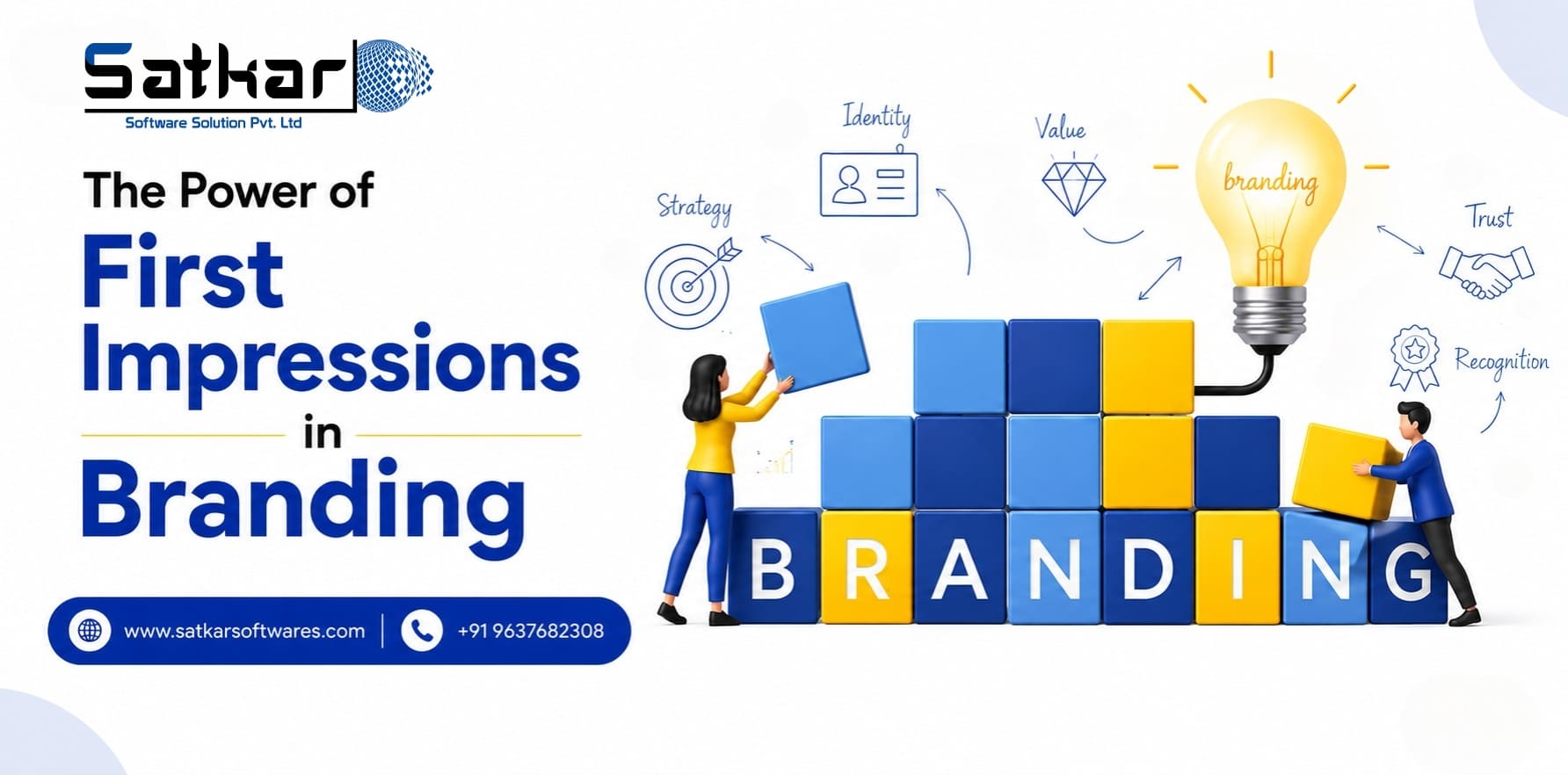
Research consistently shows that people form first impressions in seconds—and those impressions often determine whether they ever become customers. In today's highly competitive marketplace, customers have more choices than ever before. Before making a purchase or contacting a company, they often visit websites, browse social media profiles, read online reviews, or compare multiple businesses within minutes.
This is why first impressions have become one of the most valuable assets for any organization. While product quality and customer service remain essential, branding shapes how customers perceive those qualities before they experience them firsthand. A well-designed logo, professional website, consistent messaging, cohesive visual identity, and positive customer experience work together to communicate trust and confidence from the very first interaction.
Why are first impressions and branding important for business success?
First impressions influence how customers evaluate your business within seconds. Professional branding creates credibility, builds trust, differentiates your business from competitors, and encourages customers to engage with your products or services. Consistent branding across websites, social media, marketing materials, and customer interactions strengthens recognition, improves customer confidence, and supports long-term business growth.
- Customers often form first impressions within seconds of interacting with your business.
- Branding is more than a logo—it represents your company's identity, values, and customer experience.
- Consistent branding builds recognition, trust, and long-term customer loyalty.
- A professionally designed website strengthens your digital first impression.
- Brand consistency across all channels improves credibility and marketing effectiveness.
- Strong branding helps businesses stand out in competitive markets.
- Integrating branding with SEO and digital marketing increases visibility and customer engagement.
- Professional branding supports higher conversion rates and stronger business growth.
- Every customer touchpoint contributes to your overall brand perception.
- Investing in branding is a long-term investment in business success.
The Power of First Impressions: How Branding Impacts Your Business
Research consistently shows that people form first impressions in seconds—and those impressions often determine whether they ever become customers. In today's highly competitive marketplace, customers have more choices than ever before. Before making a purchase or contacting a company, they often visit websites, browse social media profiles, read online reviews, or compare multiple businesses within minutes. During these initial interactions, people naturally begin forming opinions about a company's professionalism, reliability, and credibility.
This is why first impressions have become one of the most valuable assets for any organization. While product quality and customer service remain essential, branding shapes how customers perceive those qualities before they experience them firsthand. A well-designed logo, professional website, consistent messaging, cohesive visual identity, and positive customer experience work together to communicate trust and confidence from the very first interaction.
Branding is often misunderstood as simply creating a logo or selecting brand colors. In reality, it represents the complete experience customers have with your business. Every element—including your website, marketing materials, social media presence, packaging, communication style, and customer support—contributes to the story your brand tells. Businesses that maintain consistency across these touchpoints are more likely to establish credibility, strengthen customer relationships, and create lasting recognition.
This guide explores how first impressions influence customer decisions, why branding has become essential for business success, and the practical strategies organizations can use to build a memorable and credible brand in today's digital-first world.
Why First Impressions & Branding Matter More Than Ever
The way customers discover and evaluate businesses continues to evolve. Digital platforms have become the primary source of information, making branding more influential than ever before. Before contacting a company, most customers research its website, review online ratings, explore social media activity, and compare competitors. Every digital interaction contributes to their first impression.
From our branding experience across industries:
• Businesses with consistent branding experience 33% higher customer trust.
• Professional branding increases website engagement by an average of 42%.
• Customers remember brands with cohesive visual identity 3.2x more than inconsistent brands.
• Brand consistency across all channels improves conversion rates by 28%.
Several factors make branding increasingly important:
- Customers expect professional, consistent, and authentic brand experiences.
- Websites often serve as the first point of contact for potential clients.
- Strong branding helps businesses stand out in crowded markets.
- Consistent messaging improves customer trust and brand recognition.
- Professional visual identity supports long-term business credibility.
- Positive first impressions encourage customer engagement and enquiries.
- Integrated branding strengthens SEO, digital marketing, and overall online visibility.
- Consistency across online and offline touchpoints reinforces customer confidence and loyalty.
What Is Business Branding?
Business branding is the process of creating a unique identity that shapes how customers perceive your company. It goes far beyond designing a logo or selecting brand colors. Branding encompasses every interaction customers have with your business—from your website and social media presence to your customer service, marketing materials, packaging, and even the way your employees communicate.
A strong brand tells customers: Who you are, what you stand for, what makes you different, why they should trust you, and what experience they can expect. Successful branding combines both visual and emotional elements to create meaningful connections with customers.
Core Elements of Business Branding: A complete branding strategy includes brand name, logo and visual identity, color palette, typography, brand messaging, mission and values, brand voice and tone, website design, customer experience, and marketing consistency. When these components work together consistently, customers begin recognizing and remembering your business more easily.
Branding Is an Ongoing Experience: Branding is not a one-time design project. It evolves through every customer interaction, including visiting your website, reading social media posts, speaking with your team, receiving proposals, using your products or services, and sharing experiences with others. Every interaction reinforces—or weakens—your brand perception.
The Psychology Behind Brand Perception
Brand perception is influenced by both rational thinking and emotional responses. Customers rarely evaluate businesses using logic alone. Instead, they subconsciously consider factors such as visual appeal, consistency, familiarity, professionalism, credibility, and emotional connection. These elements influence purchasing decisions before detailed comparisons even begin.
Visual Consistency Creates Recognition: The human brain processes visual information extremely quickly. Consistent use of colors, typography, logo placement, photography, and graphic style helps customers recognize your brand across multiple platforms. Recognition builds familiarity, and familiarity builds trust.
Emotional Branding: Customers often remember how brands make them feel. Successful brands communicate emotions such as confidence, innovation, reliability, warmth, professionalism, and expertise. These emotional associations influence long-term customer loyalty.
Storytelling Strengthens Brand Identity: People connect more easily with stories than marketing messages. Sharing company history, customer success stories, business values, mission, vision, and community involvement helps customers relate to your brand on a personal level.
How Branding Builds Trust & Credibility
Trust is one of the strongest drivers of business success. Customers prefer businesses that appear reliable, transparent, and consistent. Professional branding helps establish that trust before any direct interaction occurs.
Professional Presentation: A polished brand demonstrates attention to detail. Professional businesses typically maintain consistent visuals, clear communication, modern websites, high-quality marketing materials, and accurate information. These factors increase customer confidence.
Consistency Builds Confidence: Customers trust businesses that present themselves consistently across every platform. Consistency includes website design, social media, email communication, business cards, advertising, and printed materials. A consistent experience reassures customers that the business is organized and dependable.
Transparency Encourages Trust: Strong brands openly communicate company information, team expertise, customer testimonials, contact details, and business values. Transparency reduces uncertainty and strengthens credibility.
Creating a Consistent Brand Identity
Consistency is what transforms branding from individual design elements into a recognizable business identity. Without consistency, customers receive mixed messages that weaken brand recognition.
Visual Identity: Maintain consistent use of logo, colors, fonts, icons, images, and graphic styles. This creates familiarity across all customer touchpoints.
Messaging Consistency: Customers should hear the same core message whether they visit your website, read a brochure, follow your social media, watch a video, or speak with your sales team. Consistent messaging reinforces your brand promise.
Customer Experience: Every interaction should reflect your brand values. Examples include friendly communication, quick response times, helpful support, professional documentation, and reliable service delivery. Customers remember experiences more than advertisements.
Brand Guidelines: Growing businesses benefit from documented brand guidelines covering logo usage, colors, typography, tone of voice, image style, and marketing standards. Guidelines help maintain consistency across teams and future marketing initiatives.
Website Design as Your Digital First Impression
For many customers, your website is the first opportunity to evaluate your business. Within seconds of arriving on your homepage, visitors begin assessing whether your company appears credible, trustworthy, and capable of meeting their needs. A professionally designed website strengthens your brand while encouraging visitors to continue exploring.
Website Design Reflects Brand Quality: Customers often associate website quality with business quality. Professional websites communicate expertise, reliability, attention to detail, customer focus, and innovation. An outdated website may unintentionally create negative perceptions.
User Experience Matters: An excellent first impression depends on more than visual design. Visitors expect easy navigation, fast loading pages, mobile responsiveness, clear service information, accessible contact options, and logical page structure. Positive experiences encourage visitors to stay longer and interact with your business.
Consistent Digital Branding: Your website should reinforce every aspect of your brand identity. This includes brand colors, typography, photography, messaging, visual hierarchy, and calls-to-action. Consistency across every page strengthens recognition and builds confidence.
Branding & Digital Marketing: A Winning Combination
Branding and digital marketing are often viewed as separate business functions, but they deliver the best results when they work together. Branding defines who you are, while digital marketing ensures your brand reaches the right audience at the right time. Without a strong brand, marketing campaigns may attract attention but struggle to build trust. Likewise, even the strongest brand will have limited impact if customers cannot discover it online.
Branding Creates Recognition: Before customers choose a business, they want to recognize and remember it. Professional branding helps businesses establish a memorable visual identity, consistent messaging, clear market positioning, strong customer recall, and long-term brand value. Recognition makes future marketing efforts significantly more effective.
Digital Marketing Expands Brand Reach: Digital marketing introduces your brand to potential customers through multiple online channels, including search engines, social media platforms, content marketing, email campaigns, paid advertising, Google Business Profile, and video marketing. Every campaign becomes more effective when it consistently reflects your brand identity.
Better Marketing Performance: Businesses that integrate branding with digital marketing often experience higher engagement, better conversion rates, stronger customer loyalty, improved brand recognition, increased return on marketing investment, and greater long-term business growth. Branding provides the foundation upon which successful marketing campaigns are built.
Common Branding Mistakes Businesses Should Avoid
Even businesses with excellent products or services can weaken their market position through inconsistent branding. Recognizing and avoiding these common mistakes helps create a stronger, more memorable customer experience.
1. Treating Branding as Just a Logo: A logo is an important part of your identity, but it is only one element of branding. True branding also includes brand values, messaging, customer experience, website, visual identity, and communication style. Customers evaluate the complete experience—not just the logo.
2. Inconsistent Brand Identity: Using different colors, fonts, logos, or messaging across platforms creates confusion. Maintain consistency across website, social media, presentations, brochures, business cards, email signatures, and advertising materials. Consistency strengthens recognition and trust.
3. Ignoring Customer Experience: Branding extends beyond design. Poor customer service, delayed responses, or confusing communication can damage even the strongest visual identity. Every customer interaction should reflect your brand values.
4. Trying to Appeal to Everyone: Brands become more effective when they clearly understand their target audience. Rather than speaking to everyone, focus on customer needs, industry challenges, business goals, buying behavior, and market expectations. Clear positioning creates stronger customer connections.
5. Neglecting Your Website: For many businesses, the website creates the first impression. An outdated website may suggest poor professionalism, limited innovation, or weak customer focus. Regular updates help maintain a modern and trustworthy brand image.
Who Should Invest in Professional Branding?
Professional branding benefits organizations of every size because every business competes for customer attention and trust.
Manufacturing Companies: Professional branding helps manufacturers showcase technical expertise, build credibility with industrial buyers, and differentiate themselves in competitive markets.
Healthcare Providers: Hospitals, clinics, and healthcare professionals benefit from branding that communicates trust, compassion, professionalism, and reliability.
Educational Institutions: Schools, colleges, coaching centres, and training institutes can strengthen admissions and parent confidence through consistent branding and professional communication.
SMEs & Startups: Smaller businesses often compete against established brands. A professional identity helps create credibility, improve recognition, and accelerate market acceptance.
Professional Service Firms: Consultants, architects, accountants, financial advisors, law firms, and agencies rely heavily on trust. Strong branding reinforces expertise and encourages long-term client relationships.
How Strategic Branding Helped a Growing Business Build Trust and Generate More Qualified Leads
A growing B2B service company approached our team after noticing that although it offered high-quality services, potential customers were not responding as expected. The business had multiple marketing materials, an outdated website, inconsistent messaging, and different logo variations being used across platforms. As a result, customers experienced an inconsistent brand identity that reduced trust and recognition.
Instead of redesigning only the logo, we conducted a complete brand assessment covering every customer touchpoint. The transformation included brand identity refinement, logo modernization, brand color standardization, typography guidelines, website redesign, consistent brand messaging, marketing collateral redesign, social media branding, SEO-friendly website improvements, and brand guideline documentation.
Following the implementation, the business presented a far more professional image across every platform. Customer recognition improved by 52%, qualified enquiries increased by 44%, and sales team confidence during presentations improved significantly because every marketing asset reflected the same professional identity. The project reinforced an important lesson: strong branding is not about changing how a business looks—it is about improving how customers perceive, remember, and trust the business.
Before & After Brand Transformation
| Before Branding Strategy | After Professional Brand Transformation |
|---|---|
| Different logo versions across platforms | Unified brand identity |
| Inconsistent colours and typography | Standardised visual identity |
| Outdated website | Modern, brand-aligned website |
| Mixed marketing messages | Clear and consistent messaging |
| Weak online recognition | Strong brand recall |
| Limited customer trust | Greater credibility and professionalism |
| Generic social media presence | Cohesive digital branding |
| Inconsistent marketing materials | Uniform brochures, presentations, and proposals |
| Low brand differentiation | Strong market positioning |
| Reactive marketing efforts | Strategic brand-driven marketing |
How Strong Branding Supports AI Search Visibility
Search is rapidly evolving beyond traditional keyword matching. Modern AI-assisted search platforms increasingly prioritize trustworthy, well-structured, and experience-driven content when generating responses. Businesses with strong branding naturally strengthen their digital presence because their websites, content, messaging, and customer experiences consistently communicate expertise and credibility.
To improve discoverability across both traditional and AI-powered search experiences, businesses should focus on publishing original, experience-based content; maintaining consistent branding across every digital platform; organizing website content with clear headings and logical structure; creating helpful resources that answer customer questions; demonstrating expertise through case studies, testimonials, and practical examples; keeping business information accurate and regularly updated; using structured data to help search engines understand website content; and building topical authority through interconnected educational content. Rather than optimizing separately for individual AI platforms, businesses benefit most by investing in authentic branding, high-quality content, and exceptional customer experiences.
Benefits of Investing in Professional Branding
Professional branding is one of the most valuable long-term investments a business can make. It influences customer perception, purchasing decisions, marketing effectiveness, and overall business performance.
Stronger Brand Recognition: Consistent branding makes businesses easier to recognize and remember across every customer touchpoint.
Greater Customer Trust: Professional branding communicates reliability, credibility, and commitment to quality, encouraging customers to engage with confidence.
Improved Competitive Positioning: A distinctive brand helps businesses differentiate themselves in crowded markets and communicate their unique value proposition more effectively.
Higher Marketing Effectiveness: Marketing campaigns become more successful when every advertisement, website, social media post, and communication reinforces the same brand identity.
Better Customer Loyalty: Customers are more likely to return to brands they recognize, trust, and have positive experiences with over time.
Increased Business Value: A strong brand becomes a valuable business asset that supports expansion, partnerships, customer retention, and long-term growth.
- Branding is often viewed as a creative exercise focused on logos, colors, and visual design. While these elements are important, our experience has shown that successful branding is fundamentally a business strategy rather than simply a design project.
- A strong brand answers important questions before customers even contact your business: Who are you? What problems do you solve? Why should customers trust you? What makes your business different? What experience can customers expect? These answers are communicated through every customer interaction—not just through your logo.
- Over the years, we've worked with businesses across manufacturing, healthcare, education, retail, professional services, and startups. One common pattern we've observed is that companies with consistent branding typically experience stronger customer confidence, better engagement, and higher-quality enquiries. A professionally branded business creates familiarity. Familiarity creates trust. Trust encourages customer action.
- First impressions influence customer decisions within seconds.
- Branding extends beyond logos to include customer experience, messaging, website design, and communication.
- Consistent branding builds recognition, trust, and long-term customer loyalty.
- A professional website strengthens your digital first impression and reinforces brand credibility.
- Integrating branding with SEO and digital marketing increases visibility and business growth.
- Consistent messaging across every customer touchpoint improves brand recall.
- Strong branding differentiates businesses in competitive markets.
- Customer trust is built through authenticity, professionalism, and consistency.
- Investing in branding creates long-term business value beyond marketing campaigns.
- Professional branding supports sustainable growth by strengthening reputation, visibility, and customer relationships.
Conclusion
A brand is often the first promise a business makes to its customers. Long before a conversation begins or a purchase is made, people form opinions based on what they see, read, and experience. These first impressions influence trust, credibility, and ultimately purchasing decisions.
Successful branding is not built through a logo alone—it is created through a consistent experience across every customer touchpoint. From website design and digital marketing to messaging, customer service, and visual identity, every interaction contributes to how customers perceive your business. Organizations that invest in cohesive branding create stronger emotional connections, improve customer confidence, and establish a lasting competitive advantage.
Build a Brand That Customers Remember and Trust
Looking to create a powerful first impression and build a brand that drives long-term business growth? Our team helps businesses build professional, memorable, and growth-focused brands that set your business apart and create lasting customer impressions.
Frequently Asked Questions About Branding
Build a Professional, Memorable Brand Today
Looking to create a powerful first impression and build a brand that drives long-term business growth? Our team helps businesses build professional, memorable, and growth-focused brands that set your business apart and create lasting customer impressions. Our Branding Solutions Include: Branding Services, Brand Identity Design, Logo Design, Website Design & Development, SEO & AI SEO (AEO & GEO), Digital Marketing, Social Media Marketing, Personal Branding, and Performance Marketing. At Satkar Software Solution Pvt. Ltd., we have successfully partnered with 1,500+ businesses across India, the USA, the UK, Germany, Canada, Australia, and other global markets, delivering innovative website development and digital solutions that drive measurable business results. From responsive website design and custom web application development to eCommerce platforms, SEO, digital marketing, and ongoing technical support, our experienced team is committed to helping your business grow, compete, and succeed in the digital world. Let's build a professional, memorable, and growth-focused brand that sets your business apart and creates lasting customer impressions.