Setting Up Success: Core Elements of Your Marketing Plan's "Before Phase"
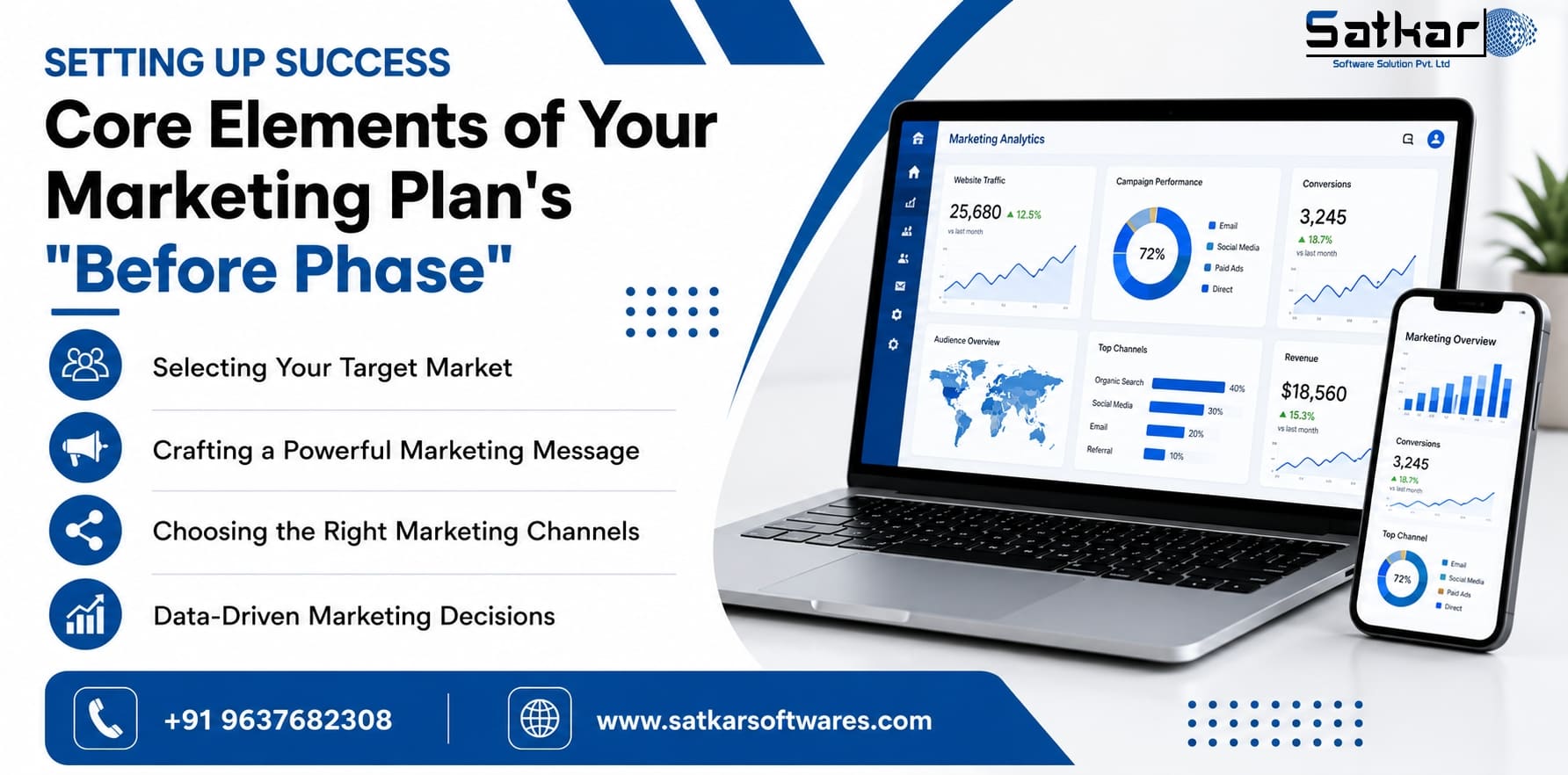
The Before Phase of marketing focuses on identifying the ideal target audience, understanding customer needs and pain points, crafting a compelling marketing message, defining a unique value proposition (UVP), selecting the right marketing channels, and testing and optimizing campaign performance. Businesses that invest time in planning before launching campaigns are more likely to achieve measurable marketing success.
What is the Before Phase of a marketing plan?
The Before Phase is the planning stage of a marketing strategy where businesses identify their target audience, create effective messaging, and select the best channels to reach potential customers. This stage lays the foundation for successful marketing campaigns and improved ROI.
- The Before Phase is the foundation of marketing success.
- Defining a specific target audience improves campaign effectiveness.
- Focusing on customer benefits over product features drives engagement.
- Choosing the right marketing channels ensures your message reaches the right people.
- Testing and optimization improve marketing ROI over time.
- Proper planning reduces marketing waste and increases conversions.
Setting Up Success: Core Elements of Your Marketing Plan's "Before Phase"
Every successful marketing campaign begins long before the first advertisement is published or the first social media post goes live. The foundation of effective marketing lies in what marketers often call the "Before Phase" — the planning stage where businesses identify their audience, develop compelling messaging, and determine the most effective channels to reach potential customers.
Many businesses invest heavily in marketing activities without first understanding who they are targeting and how they should communicate their value. As a result, marketing budgets are wasted, campaigns underperform, and opportunities are missed.
A well-structured Before Phase helps businesses create focused marketing campaigns that generate better engagement, higher conversions, and stronger returns on investment.
At Satkar Software Solution Pvt. Ltd., we have helped more than 1500 businesses develop effective marketing strategies that deliver measurable results.
In this guide, we'll explore the three essential components of the Before Phase and explain how each contributes to marketing success.
Why the Before Phase Matters
Build a Strong Marketing Foundation
The Before Phase is where strategy takes shape. Instead of immediately launching advertisements or promotions, businesses should first understand who their ideal customers are, what problems those customers face, how their products or services solve those problems, and where those customers spend their time online.
By answering these questions early, businesses can create more targeted and effective marketing campaigns.
Benefits of Proper Planning:
- Reduced marketing waste
- Improved conversion rates
- Better customer engagement
- Higher campaign ROI
- Stronger brand positioning
3 Core Elements of the Marketing Plan Before Phase
Selecting Your Target Market
Define Your Ideal Customer
One of the biggest mistakes businesses make is trying to market to everyone. When a message is too broad, it often resonates with no one. Instead, businesses should focus on a specific audience that is most likely to benefit from their products or services.
Understanding Demographics: Age, gender, income, education, occupation, and geographic location.
Understanding Psychographics: Interests, values, lifestyle, goals, challenges, and buying behaviors.
Example: If you're a financial advisor, your ideal audience might be young professionals, newly married couples, first-time investors, or business owners planning retirement. The more specific your audience, the more effective your marketing becomes.
- Age & Gender
- Income & Education
- Interests & Values
- Buying Behaviors
Crafting a Powerful Marketing Message
Speak to Customer Needs
After identifying your audience, the next step is creating messaging that connects emotionally and logically. Customers don't buy products or services simply because of features. They buy solutions to their problems.
Focus on Benefits Over Features: Instead of saying "Our software includes advanced automation capabilities," say "Save time, reduce manual work, and improve business efficiency with automated workflows."
Understand Customer Pain Points: What problems are customers facing? What frustrations do they experience? What goals are they trying to achieve? Your marketing message should clearly demonstrate how your solution helps overcome these challenges.
Create a Strong Unique Value Proposition (UVP): Your UVP explains why customers should choose your business over competitors. A strong UVP should answer: Why should customers choose you? Examples: Faster delivery, better support, specialized expertise, more affordable pricing, or proven results.
- Focus on Benefits
- Address Pain Points
- Clear UVP
- Customer Outcomes
Choosing the Right Marketing Channels
Reach Customers Where They Already Spend Time
Even the best message will fail if it doesn't reach the right audience. Choosing the correct marketing channels is critical. Different audiences prefer different platforms.
| Channel | Best For |
|---|---|
| Local businesses, B2C | |
| Lifestyle, retail, personal brands | |
| B2B companies, professionals | |
| YouTube | Educational and video content |
| Google Ads | High-intent customers |
| Email Marketing | Customer retention and nurturing |
| SEO | Long-term organic growth |
Match Channels to Audience Behavior: Younger audiences prefer Instagram, YouTube, and Facebook. Professionals lean toward LinkedIn and Google Search. Local customers use Google Business Profile, Local SEO, and Facebook. Understanding customer behavior improves campaign performance significantly.
- Google Ads
- Email Marketing
Test and Optimize Marketing Channels
Data-Driven Marketing Decisions
When budgets allow, businesses should test multiple channels. Run small campaigns on Facebook, Instagram, LinkedIn, Google Ads, and email marketing. Then analyze click-through rates, leads generated, conversion rates, and cost per lead. Invest more heavily in the channels delivering the strongest results.
- Trying to Target Everyone: Broad targeting weakens messaging effectiveness.
- Focusing Only on Features: Customers care more about benefits and outcomes.
- Ignoring Customer Pain Points: Understanding customer problems is critical for engagement.
- Choosing the Wrong Marketing Channels: Every audience behaves differently online.
- Failing to Measure Results: Marketing decisions should be based on data, not assumptions.
E-E-A-T Factors for Marketing Content
Google evaluates content based on Experience, Expertise, Authoritativeness, and Trustworthiness (E-E-A-T). These factors are especially important for marketing-related content.
| E-E-A-T Factor | Impact on Marketing Content |
|---|---|
| Real-World Marketing Experience | Very High |
| Industry Expertise | Very High |
| Professional Authority | Very High |
| Trustworthy Content | Very High |
| Practical, Actionable Advice | High |
| Case Studies & Examples | High |
| Data-Driven Insights | High |
| Clear, Well-Structured Content | Medium-High |
Content that demonstrates real-world experience and practical expertise consistently outperforms generic marketing advice in search rankings.
Industry Applications
Manufacturing
Identify decision-makers: plant managers, procurement teams, business owners
Healthcare
Target patients based on healthcare needs, demographics, and location
Education
Focus on students, parents, and working professionals seeking training
SMEs & Startups
Build awareness through targeted digital marketing and content strategies
What is the Before Phase in marketing?
The Before Phase is the strategic planning stage of a marketing campaign where businesses identify their target audience, create compelling messaging, define their unique value proposition, and choose the best marketing channels to reach potential customers.
- One of the biggest reasons marketing campaigns fail is poor preparation. Businesses often rush into advertising without understanding who they are targeting or how they should communicate their value.
- The Before Phase eliminates guesswork by creating a clear roadmap for marketing success.
- When businesses understand their audience, communicate effectively, and choose the right channels, marketing becomes more efficient and profitable.
Ready to Build Your Marketing Strategy?
Our expert team at Satkar Softwares has helped 1,500+ businesses across India and globally develop effective marketing strategies that generate measurable results and sustainable growth.
Frequently Asked Questions About Marketing Planning
Start Planning Your Marketing Success Today
The Before Phase is one of the most important stages of any marketing plan. By carefully selecting your target audience, crafting compelling messages, and choosing the right marketing channels, you create a strong foundation for successful campaigns. Businesses that invest time in planning before execution often experience higher engagement, better lead generation, improved conversions, and stronger returns on marketing investment. At Satkar Software Solution Pvt. Ltd., we have helped 1,500+ businesses across Pune, Mumbai, Bangalore, Ahmedabad, USA, UK, Germany, Canada, and Australia build effective marketing strategies. Let's help you plan your marketing success.