Branding vs. Marketing: Understanding the Key Differences and Why Every Business Needs Both
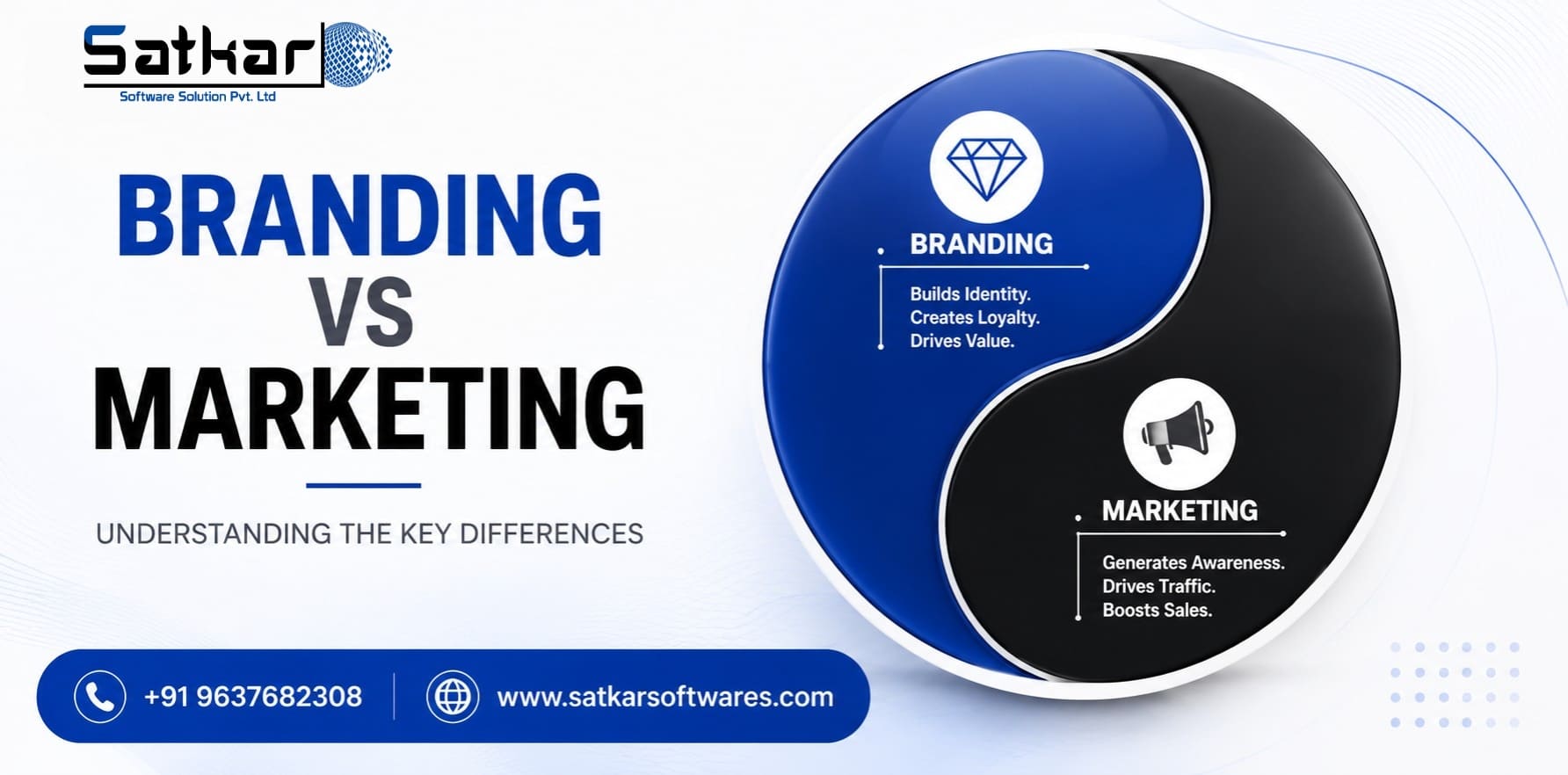
Many businesses mistakenly use the terms branding and marketing interchangeably. While both are essential for business success, they serve different purposes. Branding defines who your business is—its identity, values, personality, and the emotional connection it builds with customers. Marketing focuses on promoting that brand, attracting potential customers, generating leads, and increasing sales. In today's competitive digital landscape, successful businesses don't choose between branding and marketing—they strategically combine both. A strong brand builds trust and recognition, while effective marketing ensures that your message reaches the right audience at the right time.
What is the difference between branding and marketing?
Branding is the process of creating a unique identity, personality, and reputation for a business. It shapes how customers perceive and remember your company over the long term. Marketing involves promoting your products or services through various channels such as SEO, social media, advertising, email campaigns, and content marketing to attract customers and generate sales. Simply put: Branding builds trust. Marketing builds visibility. Together, they drive sustainable business growth.
- Branding defines your business identity and values.
- Marketing promotes your products and services to the right audience.
- Branding builds long-term trust, while marketing generates short-term results.
- A strong brand improves the effectiveness of every marketing campaign.
- Businesses that combine branding and marketing create stronger customer relationships and higher brand loyalty.
- Consistent messaging across all channels enhances recognition and credibility.
- Modern businesses need both branding and digital marketing to remain competitive.
- AI-powered search engines reward businesses with consistent branding and high-quality content.
Branding vs. Marketing: Understanding the Key Differences and Why Every Business Needs Both
In today's digital-first world, customers interact with businesses through multiple touchpoints before making a purchase. They visit websites, browse social media profiles, read online reviews, compare products, watch videos, and search for information using Google and AI-powered search platforms such as ChatGPT, Gemini, and Perplexity.
During this journey, two powerful forces influence their decisions: branding and marketing.
Although these terms are often used interchangeably, they serve distinct purposes. Branding is the foundation of your business—it defines who you are, what you stand for, and how customers perceive you. Marketing, on the other hand, communicates that brand to the world, helping you reach potential customers, generate leads, and drive sales.
Many businesses invest heavily in marketing campaigns without establishing a clear brand identity, while others build an excellent brand but struggle to reach their target audience. The most successful organizations understand that branding and marketing are not competitors—they are complementary strategies that work together to create sustainable business growth.
At Satkar Software Solution Pvt. Ltd., we have worked with manufacturing companies, healthcare organizations, educational institutes, startups, and SMEs. Through our experience, we have observed that businesses with a well-defined brand identity consistently achieve better customer trust, stronger digital visibility, and higher conversion rates when supported by strategic marketing efforts.
In this article, we'll explore the differences between branding and marketing, explain why both are essential, and demonstrate how combining them can help businesses build stronger customer relationships and achieve long-term success.
What is Branding?
Branding is much more than designing a logo or choosing brand colors. It is the complete identity of your business and the emotional connection you create with your audience. Your brand represents your company's personality, values, mission, vision, and promise to customers.
Every interaction a customer has with your business contributes to your brand—from your website design and social media presence to customer service, product quality, and even the tone of your communication.
A strong brand answers important questions such as:
- Who are you as a business?
- What makes you different from competitors?
- What values do you stand for?
- Why should customers trust you?
Branding creates consistency across every customer touchpoint. It helps people recognize your business instantly and builds confidence in your products or services.
Key Components of Branding:
- Company logo and visual identity
- Brand colors and typography
- Mission, vision, and core values
- Brand voice and messaging
- Customer experience
- Reputation and trust
- Company culture
- Emotional connection with customers
Why Branding Matters: Customers don't just buy products—they buy experiences, emotions, and trust. A recognizable and trustworthy brand helps businesses build customer loyalty, increase brand recognition, differentiate from competitors, improve customer retention, strengthen business credibility, and create lasting emotional connections.
What is Marketing?
While branding defines who you are, marketing is how you communicate your value to potential customers. Marketing involves all the strategies, channels, and campaigns businesses use to promote their products or services, generate awareness, attract leads, and increase sales.
Modern marketing extends far beyond traditional advertising. It includes a wide range of digital and offline activities designed to reach the right audience at the right time.
Some of the most effective marketing channels include:
- Search Engine Optimization (SEO)
- Answer Engine Optimization (AEO)
- Generative Engine Optimization (GEO)
- Social Media Marketing
- Content Marketing
- Email Marketing
- Google Ads
- Video Marketing
- Local SEO
- Google Business Profile Optimization
Why Marketing Matters: Even the strongest brand cannot succeed if people don't know it exists. Marketing helps businesses increase brand awareness, reach target audiences, generate qualified leads, drive website traffic, improve online visibility, increase sales and revenue, measure campaign performance, and build customer engagement.
Why Businesses Need Both Branding and Marketing
One of the biggest misconceptions in business is believing that branding and marketing can replace each other. The reality is that branding and marketing are two sides of the same coin. Branding provides the foundation by defining your identity, while marketing amplifies that identity by communicating it to the marketplace.
Imagine launching a digital advertising campaign without a clear brand identity. Customers may see your advertisements, but they won't remember your business or understand what makes it unique. Similarly, having an outstanding brand without marketing limits your visibility. Even the best products or services need effective promotion to reach potential customers.
Businesses achieve the greatest success when branding and marketing work together:
- Branding creates trust. Marketing generates awareness.
- Branding builds loyalty. Marketing attracts new customers.
- Branding shapes perception. Marketing drives engagement.
- Branding creates emotional connections. Marketing encourages action.
Together, they create a powerful customer journey—from first discovery to long-term advocacy.
Branding vs. Marketing: The Key Differences
| Aspect | Branding | Marketing |
|---|---|---|
| Primary Purpose | Defines business identity and values | Promotes products and services |
| Main Focus | Trust, recognition, and loyalty | Visibility, leads, and sales |
| Goal | Build long-term relationships | Generate immediate business opportunities |
| Time Horizon | Long-term investment | Short- and medium-term campaigns |
| Key Components | Logo, messaging, values, customer experience | SEO, social media, advertising, email marketing, PPC |
| Customer Impact | Creates emotional connection | Encourages action and conversions |
| Measurement | Brand awareness, loyalty, reputation | Website traffic, leads, ROI, sales |
| Business Outcome | Strong market positioning | Increased customer acquisition |
| Evolution | Gradual and consistent | Flexible and campaign-driven |
| Relationship | Builds the foundation | Amplifies the brand's message |
Both branding and marketing are essential. Branding creates the reason customers should trust you, while marketing ensures they discover your business.
How Branding and Marketing Work Together
Branding and marketing are often viewed as separate business functions, but in reality, they are deeply interconnected. Branding defines who you are as a business, while marketing communicates that identity to the right audience. Without branding, marketing lacks consistency and emotional appeal. Without marketing, even the strongest brand may struggle to reach potential customers.
Think of branding as the foundation of a house and marketing as the doors and windows that invite people inside. A strong foundation ensures stability, while effective marketing creates visibility and encourages customer engagement.
For example, a company with a well-defined brand identity—consistent messaging, professional website, recognizable logo, and clear values—will naturally make its marketing campaigns more effective. Every social media post, SEO campaign, email newsletter, and advertisement reinforces the same message, building familiarity and trust over time.
Modern businesses should integrate branding and marketing into a unified strategy where every campaign reflects the company's mission, values, and unique value proposition. This consistency improves customer recognition, strengthens loyalty, and creates long-term business growth.
- Over the years, Satkar Software Solution Pvt. Ltd. has worked with manufacturing companies, healthcare organizations, educational institutes, startups, and SMEs across India. One observation remains consistent: businesses that invest equally in branding and marketing achieve significantly better results than those focusing on only one.
- Companies with a clearly defined brand identity consistently experience higher customer trust, better lead quality, improved website engagement, stronger conversion rates, greater customer retention, and increased referral business.
- Our experience shows that customers rarely make purchasing decisions based solely on advertisements. They first evaluate the company's credibility by visiting its website, reading reviews, exploring social media profiles, and understanding its values.
- A professionally designed brand supported by strategic SEO, content marketing, social media, and AI Search Optimization creates a complete customer journey that builds confidence before the first interaction.
Why Customers Trust Strong Brands
Today's buyers are more informed than ever before. Whether they represent manufacturing companies, hospitals, educational institutes, or startups, they typically conduct extensive online research before contacting a business.
Modern customers frequently search for company background, products and services, customer reviews, case studies, industry expertise, certifications, social proof, and educational content. Businesses that consistently publish valuable content while maintaining strong branding are generally more successful in establishing authority and trust.
Industry Applications of Branding and Marketing
Manufacturing
Professional websites, technical SEO, case studies, product documentation
Healthcare
Patient education, trust-building content, local SEO, Google Business Profile
Education
Student testimonials, educational blogs, virtual tours, social media engagement
SMEs & Startups
Professional branding, content marketing, SEO, lead generation campaigns
Real-World Examples of Branding and Marketing Success
Apple: Apple has built one of the world's strongest brands by consistently communicating innovation, simplicity, and premium quality. Its branding is reflected in product design, packaging, customer experience, and minimalist communication. Apple's marketing campaigns reinforce these values rather than simply promoting products.
Nike: Nike's famous "Just Do It" slogan represents motivation, determination, and personal achievement. Every marketing campaign reinforces this emotional connection through athlete partnerships, inspirational storytelling, and social impact initiatives.
Coca-Cola: Coca-Cola's branding focuses on happiness, togetherness, and memorable experiences. Campaigns like "Share a Coke" personalized products while encouraging social interaction, strengthening global brand recognition.
Starbucks: Starbucks has successfully branded itself as more than a coffee company. Its stores provide a welcoming environment often described as a "third place" between home and work, supported by seasonal marketing campaigns and loyalty programs.
Branding & Marketing Transformation
One of our clients approached Satkar Software Solution Pvt. Ltd. with an established business but limited online recognition. Although the company offered high-quality products and services, inconsistent branding and fragmented marketing efforts made it difficult for potential customers to differentiate the business from competitors.
Our team implemented a comprehensive branding and digital marketing strategy that included website redesign, brand messaging refinement, Search Engine Optimization (SEO), Content Marketing, Google Business Profile Optimization, Social Media Marketing, AI Search Optimization, and lead generation campaigns.
Within several months, the client experienced improved online visibility, higher website engagement, better-quality inquiries, increased brand recognition, stronger customer trust, and improved conversion rates. The project demonstrated how branding establishes credibility while marketing generates opportunities for business growth.
Before & After Branding Strategy
Before
- Inconsistent brand identity
- Generic marketing campaigns
- Low brand recognition
- Weak website engagement
- Limited online authority
- Low customer trust
- Fewer qualified leads
- Minimal content marketing
After
- Strong and consistent branding
- Customer-focused marketing strategy
- Improved market visibility
- Higher user interaction
- Strong digital presence
- Increased credibility
- Higher-quality inquiries
- Educational and SEO-driven content
AI Search Engines Evaluate Brand Authority and Content Quality
AI search engines evaluate whether a business demonstrates expertise, publishes original insights, maintains consistent branding, and provides structured answers. Businesses that combine technical SEO with helpful content are more likely to be referenced in AI-generated responses.
Platforms such as Google AI Overviews, ChatGPT Search, Gemini, Perplexity, and Microsoft Copilot prioritize businesses that provide helpful, people-first content, consistent branding, structured information, expert insights, original experiences, clear FAQs, schema markup, and semantic SEO.
As AI search continues to evolve, businesses should focus on creating valuable, trustworthy, and experience-driven content supported by consistent branding across every digital channel.
What is the difference between branding and marketing?
Branding defines a company's identity, values, personality, and long-term reputation, while marketing promotes products and services to attract customers and generate sales. Branding builds trust, whereas marketing creates visibility and business growth.
- Branding defines your identity; marketing communicates it.
- Successful businesses integrate branding and marketing into one strategy.
- Consistent branding improves customer trust and recognition.
- Marketing increases visibility, leads, and conversions.
- Educational content strengthens authority and SEO performance.
- Customer experience is central to both branding and marketing.
- AI-powered search rewards businesses with helpful, structured, and authoritative content.
- Long-term business growth depends on balancing brand building with measurable marketing efforts.
Ready to Build a Powerful Brand and Marketing Strategy?
Our expert team at Satkar Softwares has helped 1,500+ businesses across India and globally build strong brands and effective marketing strategies that drive sustainable growth.
Frequently Asked Questions About Branding and Marketing
Build a Strong Brand and Marketing Strategy Today
Businesses that invest in branding without marketing often struggle to reach new audiences. Businesses that rely only on marketing without branding may generate clicks but fail to build lasting trust. Sustainable growth comes from combining a clear brand identity with consistent marketing efforts that educate, engage, and solve customer problems. At Satkar Software Solution Pvt. Ltd., we help businesses build memorable brands and powerful digital marketing strategies that drive long-term growth. Whether you're launching a new business or strengthening an established brand, our experienced team can help you build a stronger digital presence and achieve measurable business results.